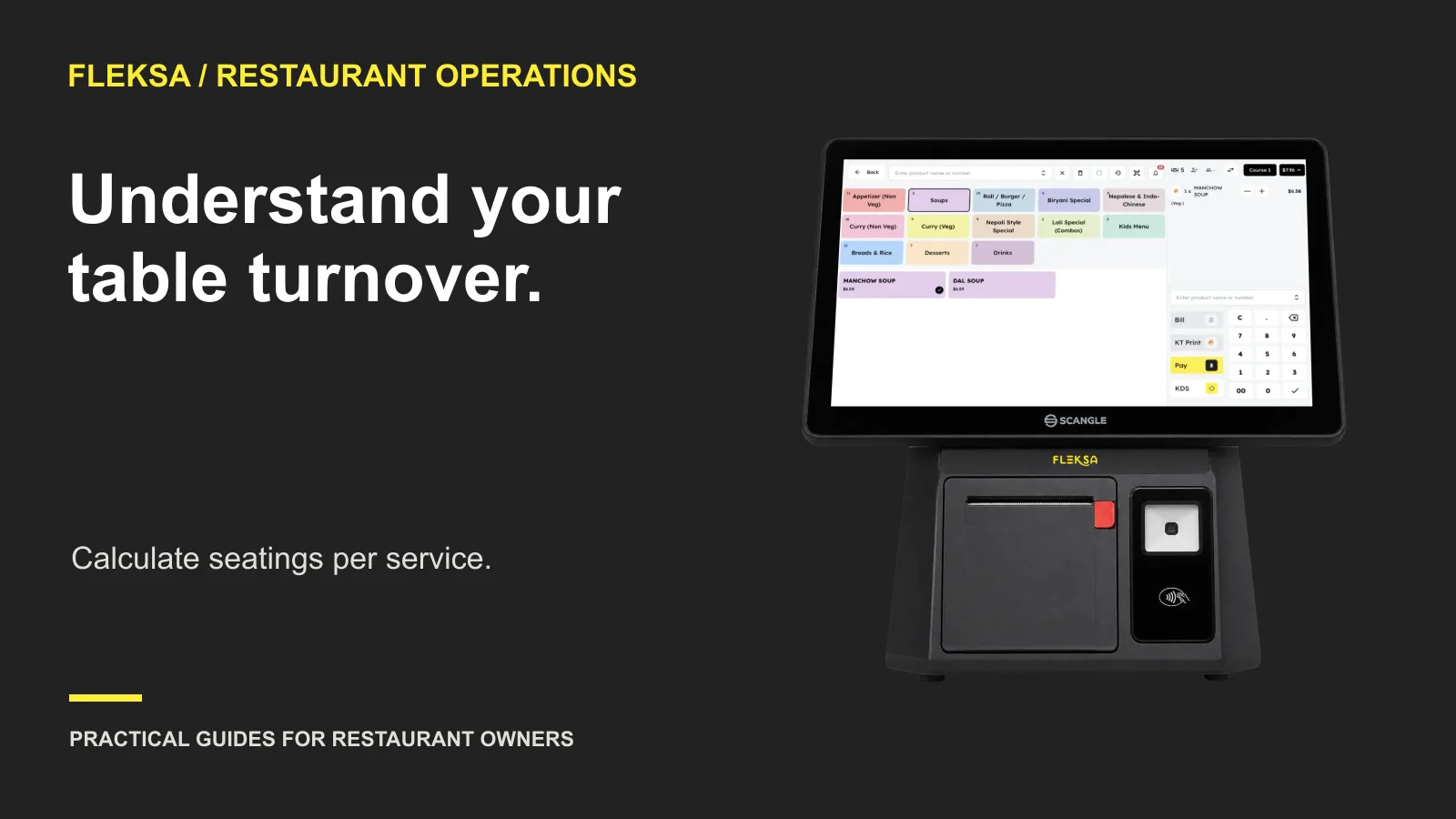
Table turnover shows how often your restaurant seats an available table during a service. Use it to understand your seating flow and find delays your team can address without rushing guests.
What Is the Restaurant Table Turnover Rate?
Table turnover is the average number of seatings per available table in a defined service. Compare similar services, such as two Friday dinners, to make the result useful.
The formula for calculating the table turnover rate is relatively straightforward:
Table turnover per service = number of table seatings ÷ number of available tables
This measure shows the average number of times an available table was seated during a service. It does not directly measure how long a party stays at a table.
How To Calculate Your Restaurant Table Turnover Rate
To calculate your restaurant's table turnover rate, follow these steps:
- Count table seatings: Count each time a table is newly seated during a defined service. If the same table is seated twice, count two seatings.
- Count available tables: Use the number of tables your team could seat during that same service.
- Divide seatings by available tables: If 30 table seatings occur across 10 available tables, average table turnover is 3 per service.
Understanding your restaurant's table turnover rate allows you to identify areas for improvement and implement strategies to optimize efficiency.
Top 6 Ways to Improve Turnover on Every Table in Your Restaurant
Tableside QR Code Order & Payment System
A tableside QR ordering and payment option can let guests review the menu or pay from their phone. Ask which steps your setup supports, then test an order and payment with staff. Measure the time saved, if any, before changing the workflow.
Check out: QR Code Order & Pay: Top 6 Features Revolutionizing the Dining Experience
Use Restaurant Reservation System
A restaurant reservation system can help staff see upcoming bookings and plan seating. Test a new booking, a change and a cancellation; check how the team handles walk-ins alongside them.
Direct Table Reservation From Google
Guests can discover your restaurant through Google. Check which booking options your Business Profile and provider currently support. When choosing a reservation system, ask whether a connection is available and how it works. Test what guests see and how bookings reach your team.
Implement Loyalty Programs to Increase Repeat Orders
A loyalty program can encourage guests to return. Track repeat visits separately from table turnover: a loyalty offer does not by itself make tables turn faster.
Optimize Staff Training and Workflow
Agree on who prepares a table, updates its status and seats the next party. Observe a busy service with the team and address the handoffs that cause delays.
Test New Restaurant Technology
Choose tools based on a problem your team can describe. Test a typical order, a change and the handoff between staff before committing to new equipment or software.
Conclusion
Compare similar services and review the results with your team. Look for avoidable delays in ordering, payment and resetting tables while allowing guests time to enjoy their visit. Higher turnover alone does not guarantee higher profit.