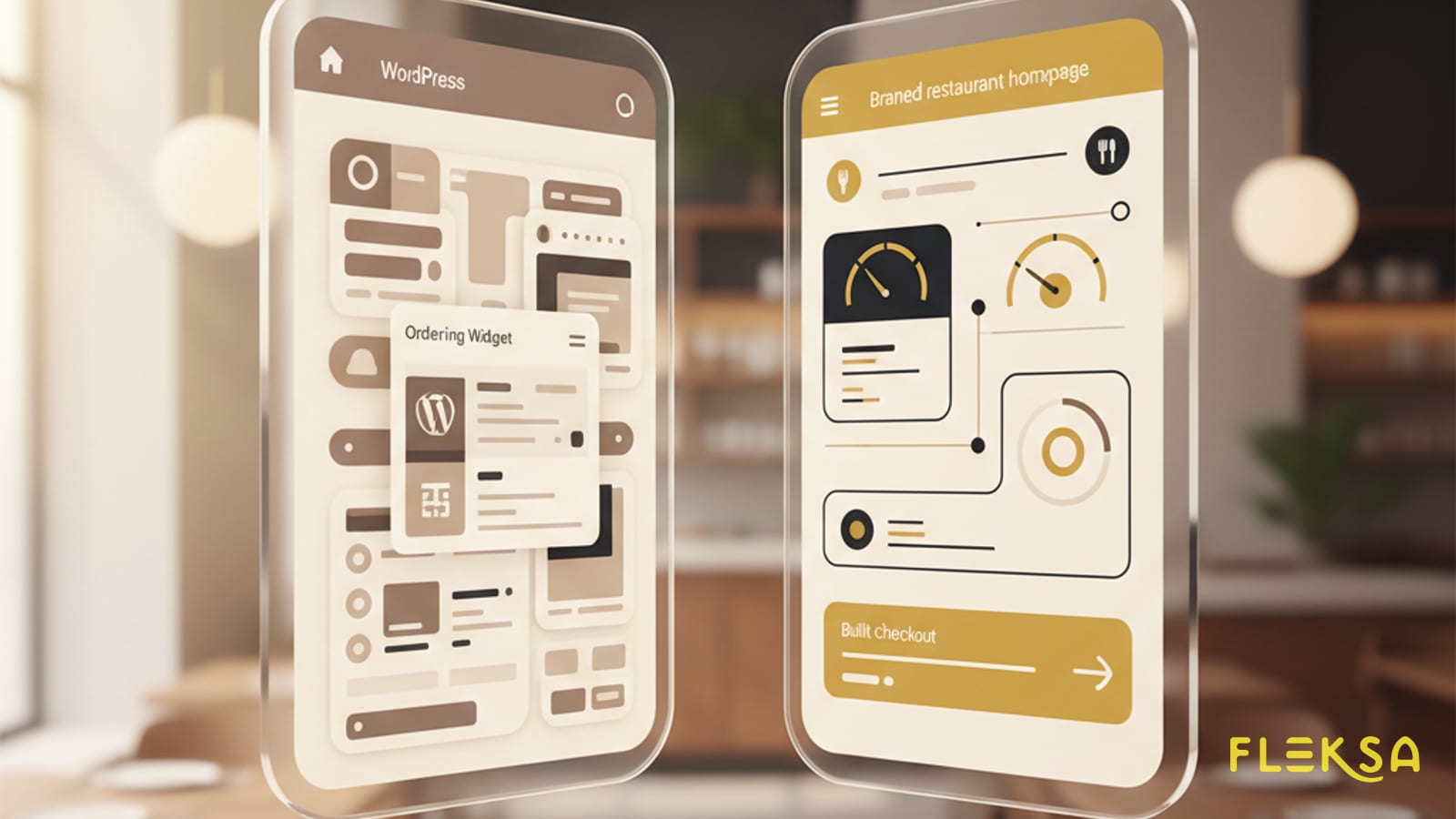
If you're a web agency that built a book of restaurant clients on "WordPress + GloriaFood widget," the April 30, 2027 retirement notice isn't a tool change. It's a business model event. The free widget you bundled with every site, the white-label reseller deal that gave you a recurring stream — all of it sunsets on the same day. This is the playbook for replacing it without losing the book.
The consumer-side shutdown gets the headlines because 123,000+ restaurants in 50+ countries lose their ordering. The gloriafood partner program alternative question is quieter, but the stakes per agency are bigger. A small agency with 30 restaurant clients on a WordPress + GloriaFood stack carries the lifetime value of a mid-market SaaS account — and unlike a single restaurant, the agency picks the replacement for all of them at once.
So this post is for you, not for your clients. Three things: why the partner program shutdown hits harder than the consumer one, what white-label actually means once you read the fine print, and how to move 20+ restaurants without churn.
Why the partner program shutdown is bigger than the consumer shutdown
For an independent restaurant, losing GloriaFood is annoying. They pick a new tool, re-enter the menu, send their loyal customers a link. Painful, but bounded.
For an agency, the same date triggers four problems at once.
First, every site in your portfolio breaks on the same day. You don't have one migration. You have N migrations, and they all have the same deadline. If you handle 40 restaurants, that's 40 menus to re-enter, 40 widgets to swap, 40 owners to notify and reassure.
Second, the white-label revenue line disappears. Resellers who sold GloriaFood under their own brand earned a margin on each subscription. That contract terminates with the product. There is no Oracle successor — they didn't roll it into Oracle Simphony, and they didn't sell the brand on. The product line ends.
Third, the WordPress stack you sold doesn't degrade gracefully. The ordering widget is the conversion engine on those sites. When it goes dark, the restaurant's website becomes a brochure. Every dollar of revenue the agency promised — "online ordering on your own domain" — depends on a piece of code that stops accepting orders.
Fourth, clients will shop your replacement. When the email arrives announcing the migration, every restaurant owner with a competitor's pitch in their inbox suddenly has cause to reconsider. You don't get to pick the timing. The shutdown picks it for you.
The agencies who treat this as a procurement task — "find the next widget, swap it in" — are going to lose clients. The agencies who treat it as a re-platforming opportunity will come out with bigger recurring contracts and a sturdier stack underneath them.
The three options agencies are actually weighing
Let's be honest about the choices on the table.
Option 1: Build a clone. Some agencies are looking at this and thinking they can spin up their own ordering platform — Stripe, a menu builder, a kitchen printer integration, a delivery handoff to Onfleet or DoorDash Drive. It's been done. It is also the most expensive mistake an agency makes. Building a payment-handling, multi-tenant, restaurant-grade ordering platform with KDS support, POS sync, modifier pricing, scheduled menus, delivery zones, fraud handling, and an admin that another business can use is a 2-4 year product effort. The economics only work if you become a SaaS company. Most agencies that go down this road end up shipping a brittle MVP, getting sued over a payment dispute, and quietly migrating their clients onto a real platform 18 months later.
Option 2: Switch to a white-label platform. Pick a multi-tenant SaaS that already does the work, plug your clients in, keep the relationship and the margin. This is what most agencies are landing on, and it's the path this post focuses on.
Option 3: Exit the vertical. If restaurants were a side line for the agency and never the main book, some shops are using this as an off-ramp — refer clients out to a direct-sale platform, take a one-time referral fee, and stop carrying the support load. Fine if it's true, but admit that's what you're doing. Don't pretend it's a migration.
If you're in Option 2 — and you should be — the next question is what "white-label" actually has to mean.
What white-label actually means (read the fine print)
"White-label" gets used loosely. Some platforms slap your logo on the customer-facing checkout and call it a day. That's not enough. A real white label restaurant ordering stack has to clear five bars.
1. Multi-tenant admin under one login. You need to manage 30 restaurants from one screen. Switch between them. See their menus, orders, settings, billing. If your team has to log in and out of 30 separate dashboards, you can't service the book.
2. Branded billing on your domain. The invoice that lands in your client's inbox should come from your agency, not from a SaaS vendor they've never heard of. The branded portal should live at a subdomain of yours. The credit card statement should read your business name, not the platform's.
3. Your own pricing. The platform sets a wholesale rate. You set the retail rate. The margin is yours. If the platform locks you into their consumer pricing, you have a referral program, not a partner program.
4. No vendor logos on the front-end. When a diner orders, the page says the restaurant's name. Not "Powered by [Platform]." Not a vendor favicon. The customer should never know the underlying stack — that's the whole point of white-label.
5. API access and custom domain support. Your agency should be able to embed the ordering flow into the WordPress, Webflow, or Shopify sites you already built. The custom domain should be one of yours (or your client's). DNS, SSL, the works — handled.
If the platform you're evaluating doesn't clear all five bars, it's not a gloriafood partner replacement. It's a slightly nicer affiliate program.
The Fleksa Partner Program, briefly
I'll be direct: Fleksa runs a partner program built for this exact moment. Here's what's in it, in plain terms.
- Multi-tenant agency admin. One login, every restaurant client visible, switch between them in a click. Bulk operations across your book.
- Branded reseller portal. Your domain, your logo, your billing. Restaurants sign in to your site, see your support contact, pay your invoice. Fleksa is invisible to them.
- Wholesale pricing, you set retail. You earn margin on every subscription. The bigger your book, the better the wholesale rate.
- No commissions on orders. Pickup and delivery orders go through the restaurant's own checkout. Restaurants keep the revenue. You keep the SaaS margin.
- Real branded domains per restaurant. Each client gets their own
restaurant.comsite, not a subpath on a shared domain. Their customers stay theirs. - Migration support. Fleksa's team handles the actual menu import from GloriaFood — your team isn't typing in 800 menu items across 40 clients.
- DACH coverage. If you have European clients, the platform is strong in Germany, Austria, and Switzerland — Lieferando-friendly, GDPR-native.
If you want the long version: Fleksa Partner Program.
If you're migrating off GloriaFood, you can set up a Fleksa restaurant for free — branded domain, real ordering, your own customer list. No commissions on pickup or delivery.
Migration playbook for moving 20+ restaurant clients without churn
The biggest risk in an agency migration isn't technical. It's the conversation. Clients who feel like they're being passed something cheaper, slower, or worse will quietly start shopping. Run the migration as a re-platforming announcement, not as a damage control email.
Here's the sequence that works for an agency with a 20-100 client book.
Step 1: Pick your platform now, not in Q4 2026. Every agency that's going to switch is on the same April 2027 clock. Vendors will start prioritizing inbound volume. The teams who pick early get migration engineering attention; the teams who pick in February 2027 get a help-center article and a Slack channel.
Step 2: Run a 2-client pilot. Migrate two clients first — one easy (small menu, pickup only) and one complex (multi-location, delivery, integrations). Document the actual steps. Time them. Find every edge case. This becomes your playbook for the other 38.
Step 3: Pre-export everything from GloriaFood. Menus, customer lists, order history, marketing campaigns, settings. Export it now while the system is live. The brief on this is in our step-by-step migration guide — owners can do it for one shop, agencies need to script it across many.
Step 4: Announce as an upgrade, not a forced move. Send the same email to all clients. Lead with the Fleksa partner program benefits — better domain, no commissions, better SEO, real owner accounts — not with "Oracle is shutting us down." The shutdown is the reason; the upgrade is the message.
Step 5: Batch the migrations by complexity. Easy ones first (single location, pickup only) — those build operational momentum and let you bill faster. Save the complex ones (delivery zones, multi-tab POS, integrations) for the middle of the run, when your team has internalized the playbook.
Step 6: Hold a re-onboarding call. Each client gets a 30-minute call when their new site goes live. Walk them through the admin, the orders dashboard, the new domain, the customer list. This call is where you save the relationship. Skip it and clients feel like they got swapped onto something they didn't choose.
Step 7: Add the AI layer at month 3. Once each client is stable on the new stack, you have a natural upsell — replies, content, social, SEO. That's a recurring revenue line your old GloriaFood stack never gave you. More on that below.
While you're rebuilding, run a free SEO scan on each client's site — most GloriaFood-stack sites have major on-page gaps you can quote against during the re-onboarding call.
The agency revenue model that beats the old GloriaFood reseller deal
The hard truth about the old GloriaFood partner program: the margins were thin. A free pickup tool meant most restaurants stayed on free forever, and the $30/month delivery upsell wasn't a margin printer. Agencies made money on the WordPress build and the monthly hosting/care plan — GloriaFood was the glue, not the revenue.
A modern white-label stack inverts that. The agency revenue model in 2026 looks like this:
- Setup fee per restaurant — site, branded domain, menu import. One-time, $1k-3k depending on scope.
- Monthly recurring SaaS markup — wholesale-to-retail spread on the white-label ordering platform. Per restaurant per month.
- Care plan — same as today. Updates, hosting, support. Per restaurant per month.
- AI add-ons — review replies, SEO monitoring, content drafts, social scheduling. Per restaurant per month, recurring, high margin.
The fourth line is new and it's where the next phase of agency margin lives. Restaurants don't have the time or staff to do their own review replies, content, and SEO. An agency that bundles an AI team into the care plan turns a $99 hosting line into a $299-499 services line — for work that's mostly automated underneath. Read more on what that team actually does in our explainer on AI Employees for restaurants.
The agencies that come out of the GloriaFood shutdown ahead are the ones that walk into the migration call selling a fuller stack — not just an ordering replacement, but an ordering stack plus a marketing layer the old GloriaFood widget never offered.
When NOT to recommend Fleksa to a client
I'll close with an honest section because agencies are smart enough to spot a one-sided pitch.
There are restaurants in your book that Fleksa is not the right fit for, and pretending otherwise will hurt the relationship more than the upsell helps. Be straight with them.
- High-volume chains running enterprise POS. If a client is on Oracle Simphony, Toast Enterprise, or Square for Restaurants Plus with a dedicated rep, the ordering layer is already inside the POS contract. Recommending a SaaS sidecar adds complexity, not value. Refer them inward to the POS vendor's ordering module.
- Marketplace-first restaurants. Some restaurants do 80%+ of their volume on Uber Eats / DoorDash / Lieferando and have no direct-traffic strategy. They don't need a branded ordering site; they need a marketplace ops manager. Don't sell them a stack that solves a problem they don't have.
- Restaurants with custom backend integrations. If the client built bespoke connectors to ERP, accounting, or warehouse — Fleksa might not have a native integration to that system. Quote the integration work honestly or refer them to a platform that does.
- Pure ghost kitchens running a fleet of virtual brands. A ghost kitchen running 12 delivery-only brands out of one location needs a multi-brand POS, not a per-restaurant branded site. Different product.
For every other restaurant in your book — independents, small chains, fast-casual, full-service, cafés, pizzerias, ethnic restaurants, neighborhood spots — a white-label SaaS stack is the right move and you'll improve margin on the conversion.
Ready to move? Start free on Fleksa — we'll help you import your menu from GloriaFood before it goes dark on April 30, 2027. For the agency-side conversation, the Partner Program page has the wholesale pricing, the multi-tenant admin demo, and the migration support details. Also worth reading: the 7 best GloriaFood alternatives for the client-facing comparison and the step-by-step migration playbook for the technical handoff.
FAQ
Does Oracle own GloriaFood?
Yes. Oracle acquired GloriaFood in 2020 as part of its Oracle Food and Beverage division (the same group that owns Micros and Simphony POS). The April 30, 2027 retirement is Oracle's decision, not GloriaFood's original team's, and Oracle has not announced a successor product or a sale of the brand.
What replaces the GloriaFood partner program for white-label resellers?
Multi-tenant SaaS platforms with a real partner program — Fleksa, ChowNow Pro, Flipdish, and a handful of regional players. The bar to clear: multi-tenant admin under one login, wholesale pricing with agency-set retail, branded billing on your domain, no vendor logos on the customer-facing checkout, and custom domain support. Most "white-label" claims fail at least two of those.
Can I keep my WordPress sites and just swap the ordering widget?
Mostly yes. The agencies on a WordPress + GloriaFood stack can keep the WordPress front-end and embed the new platform's checkout via iframe, JS widget, or a redirect to a branded subdomain. The harder question is whether you should keep the WordPress site — a modern SaaS site builder gives you a better mobile experience, faster load times, and an SEO baseline that most WordPress restaurant sites never had. Worth pricing both options before re-platforming.
What happens to the menus and customer lists on April 30, 2027?
They become permanently inaccessible. Oracle has confirmed no data retention beyond the cutoff date. For agencies, that means every menu across every client site has to be exported before the deadline. Most platforms accept GloriaFood menu CSV imports — get the export done now, sit on the file, and you can re-import when each client migrates rather than scrambling on the deadline. One client on the SambaPOS forum summed up the broader frustration with how the platform was run in its last years: "Features requested for almost five years that never shipped." Treat the migration as a chance to land on a stack with a faster roadmap.
Is it worth building my own ordering platform instead of using a white-label?
Almost never. Building a multi-tenant, payment-handling, restaurant-grade ordering platform is a 2-4 year product effort. The agencies who try it usually ship a brittle MVP, get caught in payment-dispute or compliance edge cases, and migrate their clients onto a real platform 18 months later — having burned the agency's cash and the clients' patience. If you want to be a SaaS company, be a SaaS company. If you want to be an agency, partner with one.