The best restaurant POS system in 2026 is not the one with the slickest tablet. It is the one whose online ordering, kitchen display, payment processing, and customer database are the same product — not seven products glued together with integrations that break every Tuesday.
That is the unfashionable thesis of this post, and it gets sharper every year. The market is rewarding it. Toast added online ordering in-house. Square folded its ordering site into Square for Restaurants. Lightspeed bought Order Anywhere. Even legacy point-of-sale brands are quietly building or acquiring direct-ordering modules. The 2017 stack of "Aloha for the till, GloriaFood for the website, ChowNow for the marketing" is dying. Oracle pulling the plug on GloriaFood (retiring April 30, 2027, no successor, 123,000+ restaurants displaced) is just the loudest example.
This is a ranking of eight serious restaurant POS systems for 2026 — with real pricing where it is public, real pros and cons, and a clear pick for each kind of operator. It is long. It is meant to be the one you can send to your accountant.
How we ranked them — selection criteria
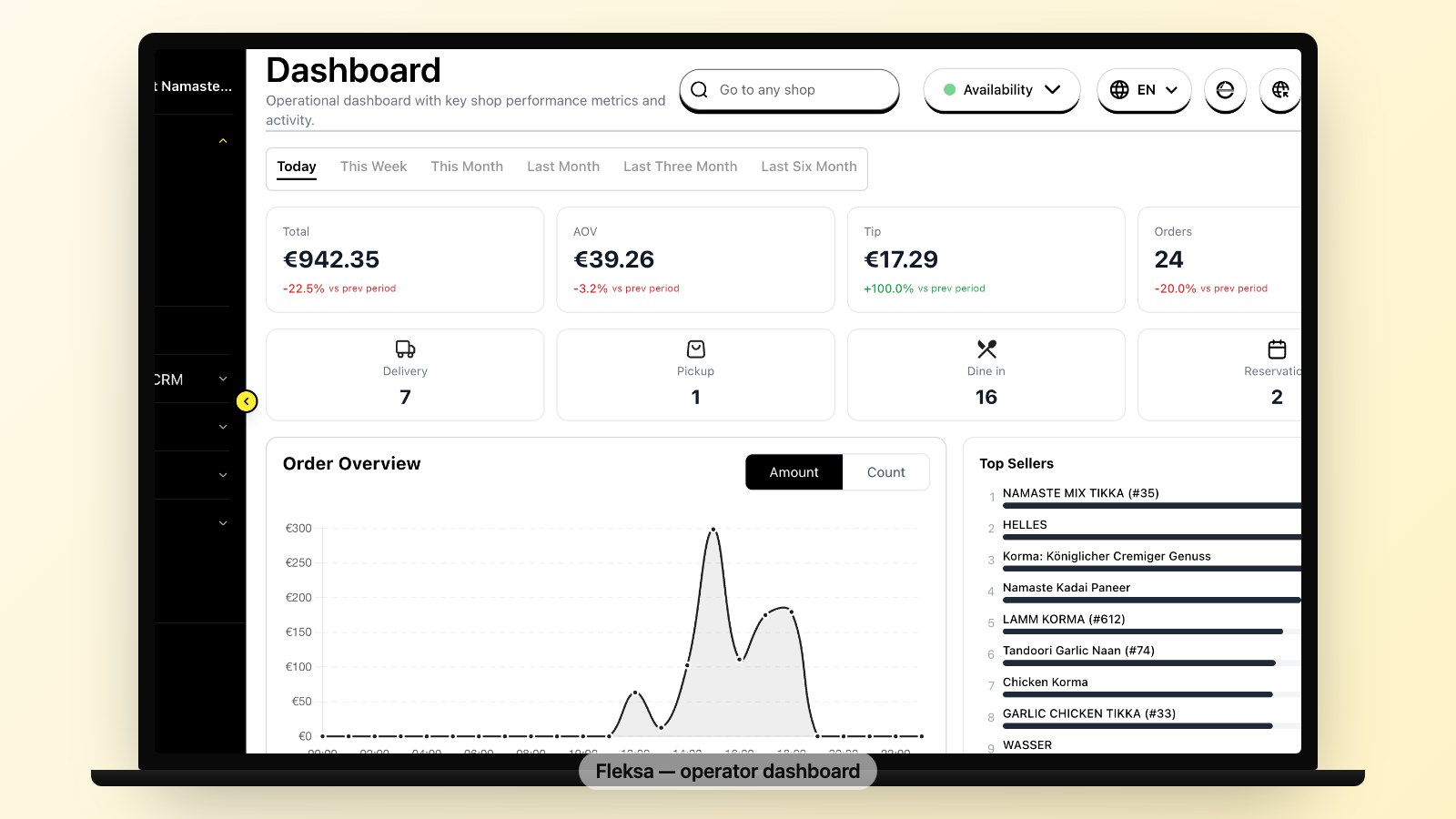
Before the list, the framework. The eight criteria that actually matter, in priority order for an independent or small-group operator:
- Online ordering included (not "integrated"). Whether the POS ships its own first-party direct-ordering site, or whether you still need a third-party widget. First-party always wins on order flow, refunds, customer records, and reliability.
- Hardware lock-in. Does the POS run on commodity tablets (iPad, Android) or proprietary terminals you have to buy from the vendor? Proprietary hardware = higher up-front cost and harder exit.
- Payment processor flexibility. Forced processor (Toast, Square) versus bring-your-own (Lightspeed, Fleksa). The forced model is usually cheaper at low volume and more expensive at high volume.
- Kitchen display and printer support. Multi-station KDS, BLE/network printers, FOH-KDS split across devices. The thing GloriaFood famously never got right.
- Multi-location support. Central menu, per-location overrides, shared customer database, consolidated reporting.
- Third-party delivery integrations. Direct, certified integrations with Uber Eats, DoorDash, Lieferando, Wolt — versus middleware (Otter, Cuboh).
- Pricing transparency. Is the price on the website, or do you have to "request a quote"? The quoted ones are almost always 2–3x more.
- Contract length. Month-to-month versus multi-year. The multi-year ones get the salesperson their bonus.
Now, the eight.
Toast POS
Toast is the loudest brand in US restaurant POS for a reason. The product is genuinely strong — first-party online ordering (Toast Online Ordering), Toast Delivery Services, Toast Mobile Order & Pay, integrated payroll, integrated loyalty, deep KDS, gift cards, and a 100+ app marketplace.
Pros: End-to-end product, great hardware, deep US ecosystem, strong reporting, real online ordering in the box.
Cons: Proprietary hardware (you must buy Toast terminals — no BYO iPad). Toast is your payment processor — you cannot choose Stripe or Adyen, the rates are negotiable but locked. Long contracts are common. Pricing is opaque ("$0/month starter" headline obscures hardware costs of $700+ per terminal and processing rates of 2.49% + $0.15 and up).
Real pricing (public): Starter Kit at $0/month software + processing. Point of Sale plan from $69/month per location. Hardware $0–$1,200+ per terminal depending on the package. Processing typically 2.49–2.99% plus $0.15.
Who it's for: US full-service and fast-casual restaurants doing $1M+/year that want one vendor and are fine being locked into Toast's payment processing.
Square for Restaurants
Square is the small-business default. Square for Restaurants includes a real POS, Square Online Ordering on your own domain (or theirs), Square Marketing, Square Loyalty, and a payments engine that runs on commodity hardware (any iPad, plus Square's terminals if you want them).
Pros: Cheap to start (Free plan exists), no contract, online ordering included on the free plan, BYO iPad, fast onboarding, transparent pricing on the website.
Cons: Square is the processor — you cannot use an alternative. Multi-location and table management are not as deep as Toast or Lightspeed. KDS is solid but not best-in-class. Customer-support quality is uneven.
Real pricing (public): Free plan ($0/month) with 2.6% + $0.10 in-person processing. Plus plan $60/month per location for table management, KDS, and advanced features. Premium custom-quoted at higher volumes.
Who it's for: Cafés, quick-service, single-location independents, and operators migrating from GloriaFood who want a free starting point. If you are searching "restaurant pos with online ordering" or "free online ordering system for restaurants," Square's free plan is almost always on the shortlist.
Clover
Clover is owned by Fiserv, sold through banks and ISOs, and runs on its own proprietary hardware (Clover Mini, Clover Flex, Clover Station). The hardware is genuinely good. The software is a marketplace — many features are third-party apps with separate billing.
Pros: Beautiful hardware, easy retail-and-restaurant flexibility, big app marketplace, often bundled by banks with merchant accounts.
Cons: Proprietary hardware lock-in is severe — Clover terminals do not work outside Clover. Online ordering is a marketplace app, not first-party. The "buy through your bank" model means pricing varies wildly and is rarely transparent. Some reseller contracts are predatory.
Real pricing (public): Hardware $599–$1,799 up front. Software plans $14.95–$94.95 per month plus processing. Processing rates vary by reseller, typically 2.3–2.6% plus $0.10.
Who it's for: Operators who get bundled into Clover by their merchant bank and do not want to think about it. Works fine for small operators with simple needs. Bad fit for anyone who wants control of their stack.
Lightspeed Restaurant (K-Series / Lightspeed Restaurant)
Lightspeed runs on iPad, supports BYO processor (or Lightspeed Payments), and added Order Anywhere as their first-party direct online ordering product. It is the closest thing to a European answer to Toast.
Pros: Runs on commodity iPad hardware, payment-processor flexibility, strong multi-location features, native direct ordering (Order Anywhere), strong in Europe and DACH.
Cons: Pricing has crept up year over year. The product is broad — you end up paying for modules (Loyalty, Advanced Insights, Order Anywhere) on top of the base POS. Onboarding is heavier than Square.
Real pricing (public): Restaurant plans from $69–$399/month per location depending on tier. Order Anywhere typically $59/month per location on top. Processing rates negotiable.
Who it's for: Independents and small chains in Europe, particularly DACH, that want a full-stack restaurant POS without Toast's hardware lock-in. Also strong for full-service in North America.
TouchBistro
iPad-based, restaurant-specific, focused on full-service. TouchBistro has a clean tableside ordering UX, decent reservations, decent KDS, and a direct online ordering add-on.
Pros: Easy front-of-house UX, runs on iPad, good for full-service table management, transparent monthly pricing, decent reservations product.
Cons: Online ordering is a paid add-on, not in the base price. Multi-location is workable but not as deep as Toast or Lightspeed. North America-focused.
Real pricing (public): From $69/month per terminal. Online Ordering add-on $50/month per location. Reservations add-on $229/month per location.
Who it's for: Independent full-service restaurants in North America that want a clean iPad POS and do not want to fight Toast contracts.
SpotOn Restaurant
SpotOn is the dark horse — a US-focused full-service and bar POS with strong handheld support, integrated payments, and a marketing suite. Heavy salesforce-led model.
Pros: Strong handheld and tableside flow, integrated marketing and loyalty, good reporting, no long-term contracts on the standard plan.
Cons: Pricing is quote-driven, not on the site. Sales process can be heavy. Online ordering is OK, not best-in-class.
Real pricing (public): Typically $0–$195/month per terminal depending on hardware and bundle, plus processing. Quote required for real numbers.
Who it's for: US full-service and bar operators who want handhelds-first and do not mind a sales call.
NCR Aloha (Aloha POS)
Aloha is the legacy enterprise POS — the one in 100,000+ casual dining restaurants in the US. NCR has been modernising it (Aloha Cloud, Aloha Essentials), but the core is still the legacy on-premise stack.
Pros: Battle-tested, deep enterprise features, integrates with virtually every third-party tool in US foodservice. The brand operators trust.
Cons: Expensive. Hardware lock-in. Long contracts. Online ordering is a separate product (Aloha Online Ordering) with separate cost. The product feels its age compared to Toast or Lightspeed if you are starting fresh.
Real pricing (public): Quote only. Real-world deals typically $1,500–$5,000 up-front hardware per location, $100–$300/month per location software, plus processing.
Who it's for: Mid-to-large US casual dining chains that already run Aloha and have no business reason to change. Bad fit for independents starting from scratch in 2026.
Fleksa POS
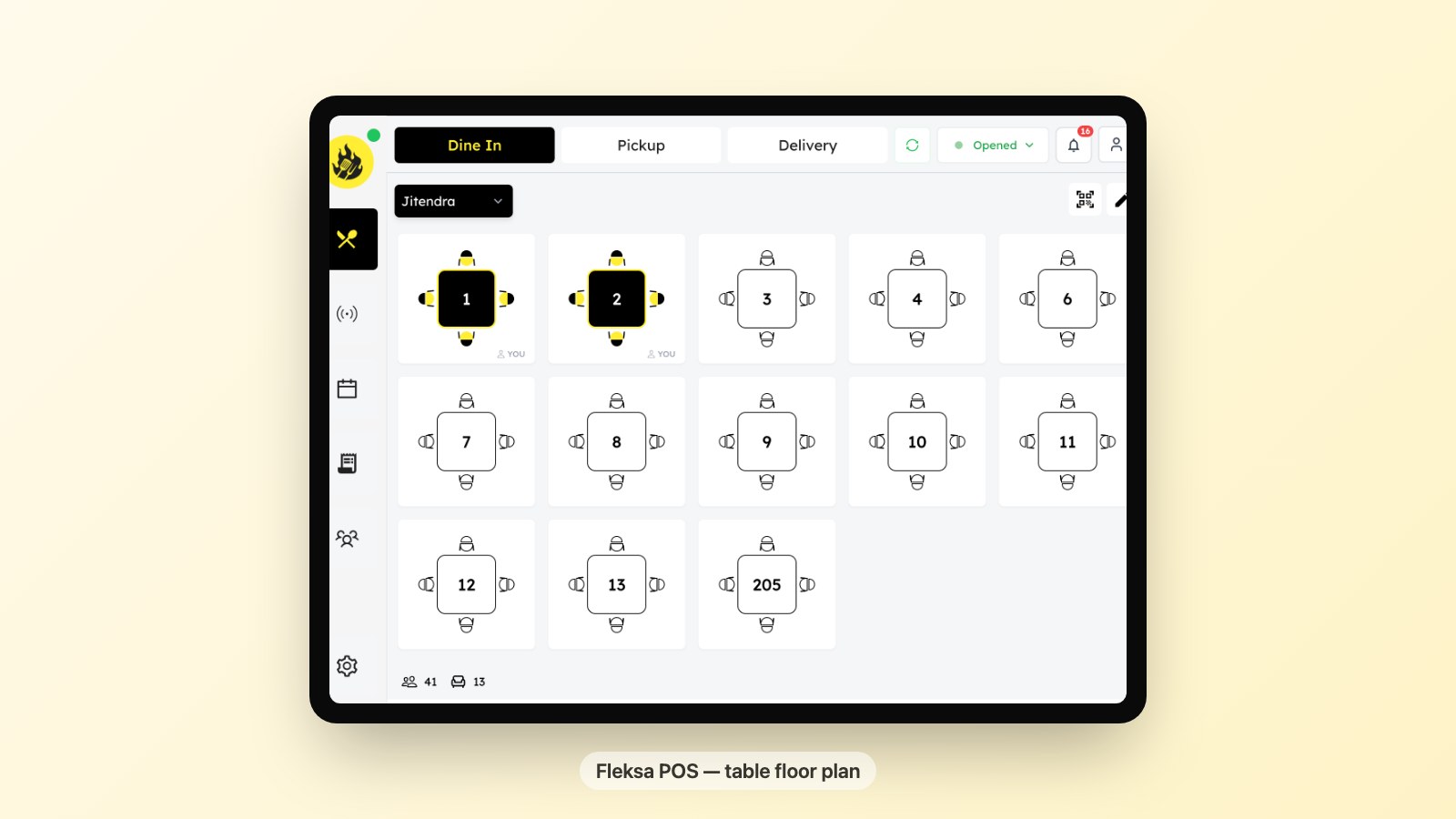
Disclosure: this is our product. The framing for this post is honest — Fleksa POS is built for one specific operator. The one who came from GloriaFood, runs 1–50 locations, and wants ordering, website, POS, and marketing as one product on their own domain.
Pros: Online ordering is first-party and on your own domain (not a widget on someone else's). KDS-and-FOH split across multiple devices (the thing GloriaFood operators repeatedly complained never worked). Delivery fees by real driving distance, not radius. Fixed-dollar discounts on delivery. Time-based menus (lunch-only menus). Zero commission on direct pickup and delivery. BYO payment processor (Stripe, Adyen, regional). Strong in DACH where direct ordering is a real wedge against Lieferando and Wolt. Native loyalty and customer database.
Cons: Smaller US ecosystem than Toast — if you need 50 niche US-specific integrations (Olo middleware, US-specific payroll providers, etc.), Toast wins. Hardware is BYO commodity (iPad / Android), which is a pro for cost and a con if you want pre-configured all-in-one terminals shipped to you.
Real pricing (public): Flat monthly platform fee, no per-order commission on direct orders. Free starter for migrating restaurants. Payment processing through your chosen processor (Stripe baseline 1.4% + €0.25 in EU, 2.9% + $0.30 in US).
Who it's for: GloriaFood refugees specifically. The 1-to-50 location independent or small group who wants the GloriaFood widget upgraded to a real platform — website + ordering + POS on one domain, no per-order tax, familiar UX. If GloriaFood was your ordering tool, setting up a Fleksa restaurant is free — branded domain, real ordering, your own customer list. No commissions on pickup or delivery.
Why ordering belongs inside your POS
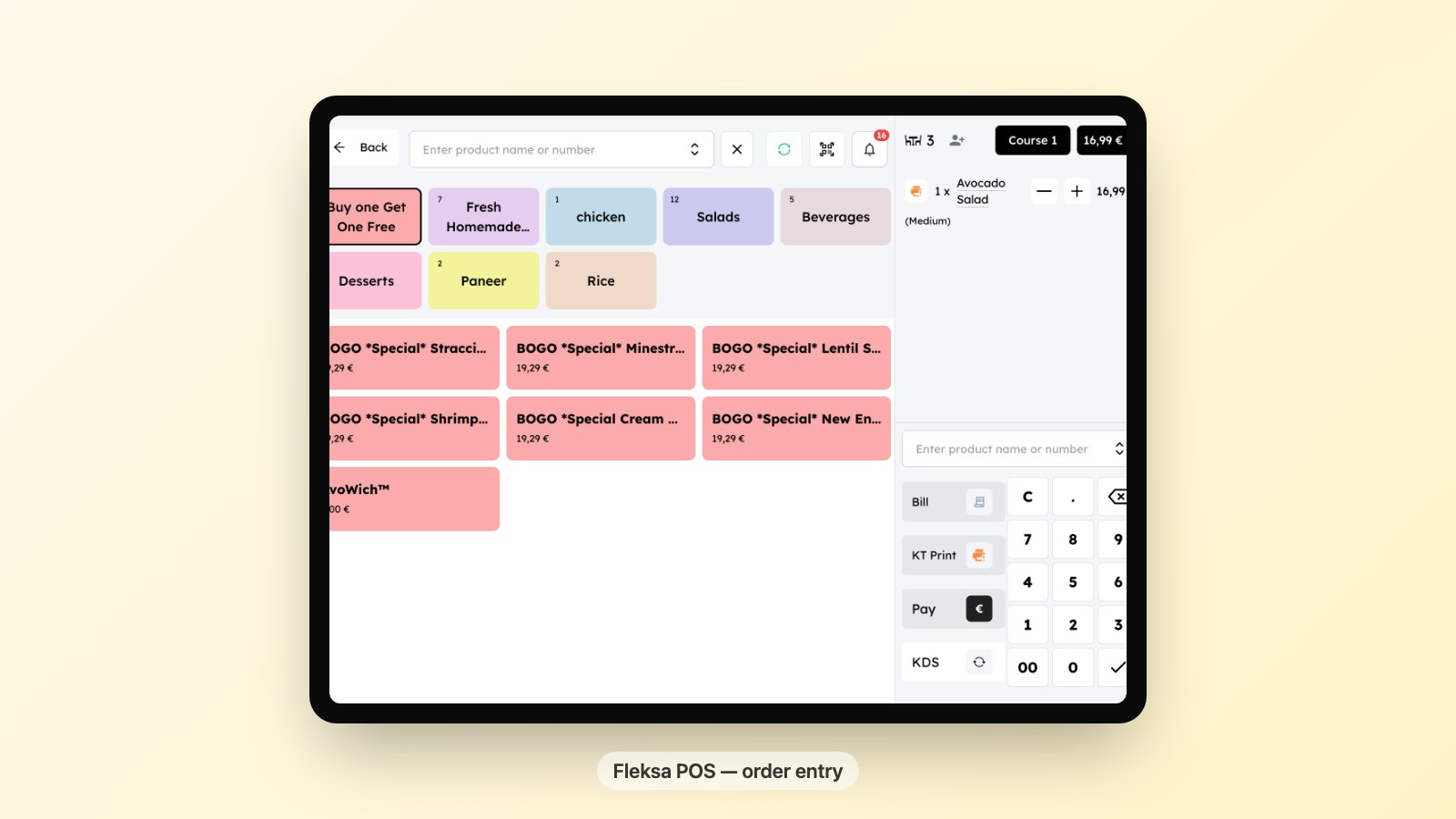
The spine of this post.
For fifteen years the standard stack was a POS that took dine-in orders and a separate "online ordering" tool that took web orders. They synced (badly) via integrations. The website lived on yet another platform. Marketing was a fourth tool. Loyalty a fifth. Each one had its own customer table. Each integration broke during the lunch rush.
Three things changed.
One: customers expect a single experience. They order online today, dine in tomorrow, and they expect the loyalty points, the coupons, and the order history to follow them. If "Sarah ordered five Margherita pizzas online this month" lives in your ordering tool and "Sarah came in for dinner with four friends" lives in your POS, you do not actually have a customer record. You have two halves of one.
Two: the commission economics broke. Third-party marketplaces take 15–30%. Even on direct ordering, the old widget model had hidden costs — multiple subscriptions, processing markup, customer data trapped in someone else's database. The operators who survived the 2024–2026 squeeze were the ones who collapsed their stack into one product and one customer database.
Three: the AI layer needs a unified data store. The reason a team like ours (Nuxa) can do things like draft Google review replies, flag at-risk regulars, and write SEO content from your actual menu — is that the data lives in one place. Five disconnected tools is the worst possible substrate for AI assistance. Run a free SEO scan on your current setup and you will see the on-page gaps that come from a fragmented stack.
If you are designing your stack in 2026, the right question is not "which POS plus which online ordering plus which website." The right question is which product handles all three on one domain. The eight POS systems above answer it differently. Toast, Square, Lightspeed and Fleksa now answer it natively. Clover, TouchBistro, SpotOn answer it through bolt-on modules. Aloha answers it through integration sprawl.
For the GloriaFood operator deciding what to do before April 2027, the choice is mostly between Square (if you are tiny and US-based and want free), Toast (if you are full-service US, $1M+, and accept the lock-in), Lightspeed (if you want flexibility and BYO processor) and Fleksa (if direct ordering is the spine of your business and you want zero commission on your own domain).
The honest ranking, then, is not "1st place to 8th place." It is the right POS for your shape of business.
- 1–5 locations, US, fast-casual or café, want free to start: Square for Restaurants.
- US full-service, $1M+/year, one-vendor preference: Toast POS.
- Europe / DACH full-service, BYO processor, broad multi-location: Lightspeed Restaurant.
- US full-service iPad-first, no lock-in: TouchBistro.
- US handheld-heavy full-service or bar, sales-led: SpotOn.
- Large US casual dining chain on legacy stack: NCR Aloha (do not rip and replace without a real reason).
- Bank-bundled small operator: Clover (acceptable, not optimal).
- GloriaFood refugee, ordering-first, direct-channel-focused, 1–50 locations: Fleksa POS.
Ready to move? Start free on Fleksa — we'll help you import your menu from GloriaFood before it goes dark on April 30, 2027. If you want the broader picture, the complete 2026 guide to restaurant online ordering systems covers the channel decisions independently of the POS choice.
FAQ
What are the top 5 POS systems for restaurants in 2026?
By total market share and product depth, the top five are Toast, Square for Restaurants, Lightspeed Restaurant, Clover, and TouchBistro — with Aloha still huge in legacy enterprise and SpotOn growing fast in US full-service. The "best" depends entirely on your size, country, and whether you want one-vendor lock-in or flexibility. For the specific case of GloriaFood operators looking for the closest direct-ordering-first replacement, Fleksa POS is purpose-built for that migration.
What POS does Gordon Ramsay use?
Different Gordon Ramsay restaurants run different stacks — there is no single global Ramsay POS. His US flagship venues have historically run Aloha and Micros (now Oracle Simphony), his UK venues a mix of Lightspeed and bespoke setups. Celebrity-chef restaurants tend to use enterprise-grade legacy POS because they sit inside large hospitality groups, not because the POS is better — it is what their group's IT team already supports.
What is the number 1 POS system?
There is no single number-one. In the US, Toast leads in new mid-market installs. In Europe and DACH, Lightspeed and regional players lead. For free entry-level POS with online ordering, Square leads on volume of small accounts. For direct-ordering-first operators (especially the post-GloriaFood independent), Fleksa is the closest one-product replacement. Anyone telling you there is a single "best" POS is selling that POS.
Can I get a restaurant POS with online ordering included for free?
Yes. Square for Restaurants has a genuinely free plan that includes Square Online Ordering on your own domain, with no monthly software fee — you pay only payment processing. Fleksa offers free onboarding for migrating restaurants with no platform fee during migration. Most other "free" POS offers turn out to be quote-driven hardware deals with processing markup that more than pays for the "free" software. Read the processing rate before you read the software price.
What is the 30 30 30 rule for restaurants?
The 30-30-30 rule is a rough cost-of-goods guideline some operators use: 30% food cost, 30% labor cost, 30% overhead (rent, utilities, marketing, tech), leaving 10% as net profit. It is not a hard rule — the real numbers vary by format (QSR labor is closer to 25%, full-service can run 35%) — but it is a useful framing when you are thinking about how much your POS, ordering, marketing and tech stack should cost. As a benchmark, your full restaurant tech stack should usually land in the 1–3% of revenue range. If your POS plus ordering plus website plus marketing is creeping above that, you are paying for fragmentation.

