Compare software, understand costs, and plan your next step.
A new restaurant website is only part of the decision. Compare who makes changes, who controls the domain, and what each delivery model could cost over three years before signing a contract.
Each restaurant location needs more than a name on a map. Use this practical inventory to decide which pages to create, what details to check, and who should keep ordering links, menus, and hours accurate.
Replacing a restaurant website can leave useful links pointing to dead pages. Use this practical checklist to inventory existing URLs, choose relevant destinations, test the ordering path, and monitor search visibility after launch.
AI can help turn restaurant notes into a first draft, but owners still need to verify what goes live. Use this practical review process to check menu claims, business details, translations, and the path from website copy to ordering.
A good restaurant website proposal should explain more than how the homepage looks. Use this scorecard to compare deliverables, ownership, mobile tasks and costs, then agree on what must work before you approve the launch.
A restaurant website needs more than a final look from the owner. Use this approval process to assign reviewers, capture evidence, resolve open issues and make a clear launch decision before guests see the site.
A restaurant-specific AI website builder may save setup work, but the right choice depends on your menu, ordering path and control over the site. Use this practical acceptance test before you commit to a plan.
Learn how local SEO helps nearby customers find your restaurant, with real search data and practical examples from Lali Son in Leander, Texas.
A transparent restaurant website performance case study: what slowed Fleksa sites, what improved QA to 98–100, and what production taught us next.
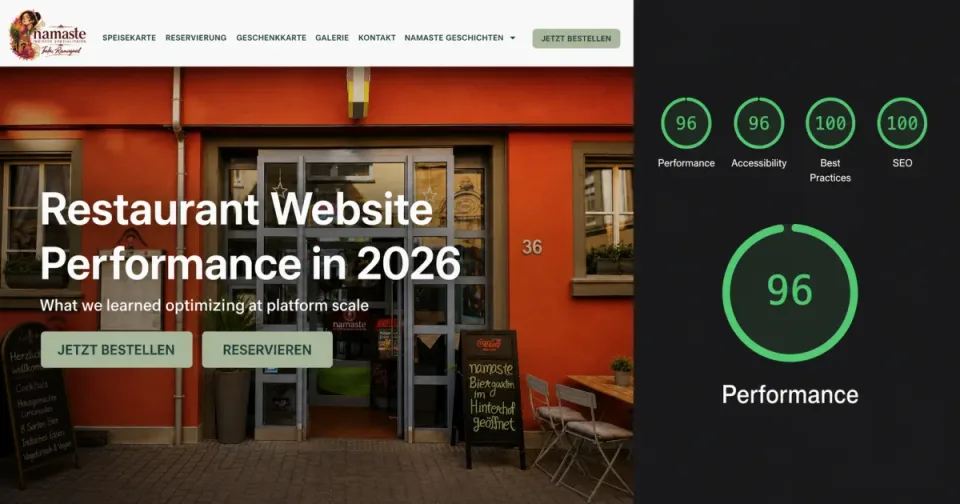
Why restaurant website speed affects mobile orders, Core Web Vitals, SEO and AI discovery in 2026—and what a fast score cannot guarantee.
Page 11 of 11
Older articles for diners